About limb reconstruction
For bone correction, lengthening or complex bone healing with frames or internal fixation. Your reconstruction team’s loading, movement and wound-care instructions take priority.
Your recovery roadmap
-
Protect healing
Know your limits
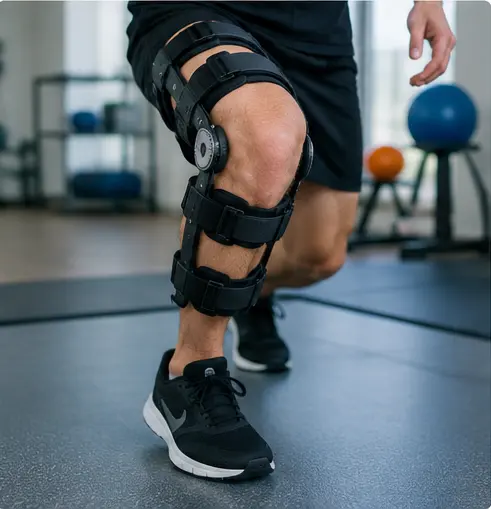
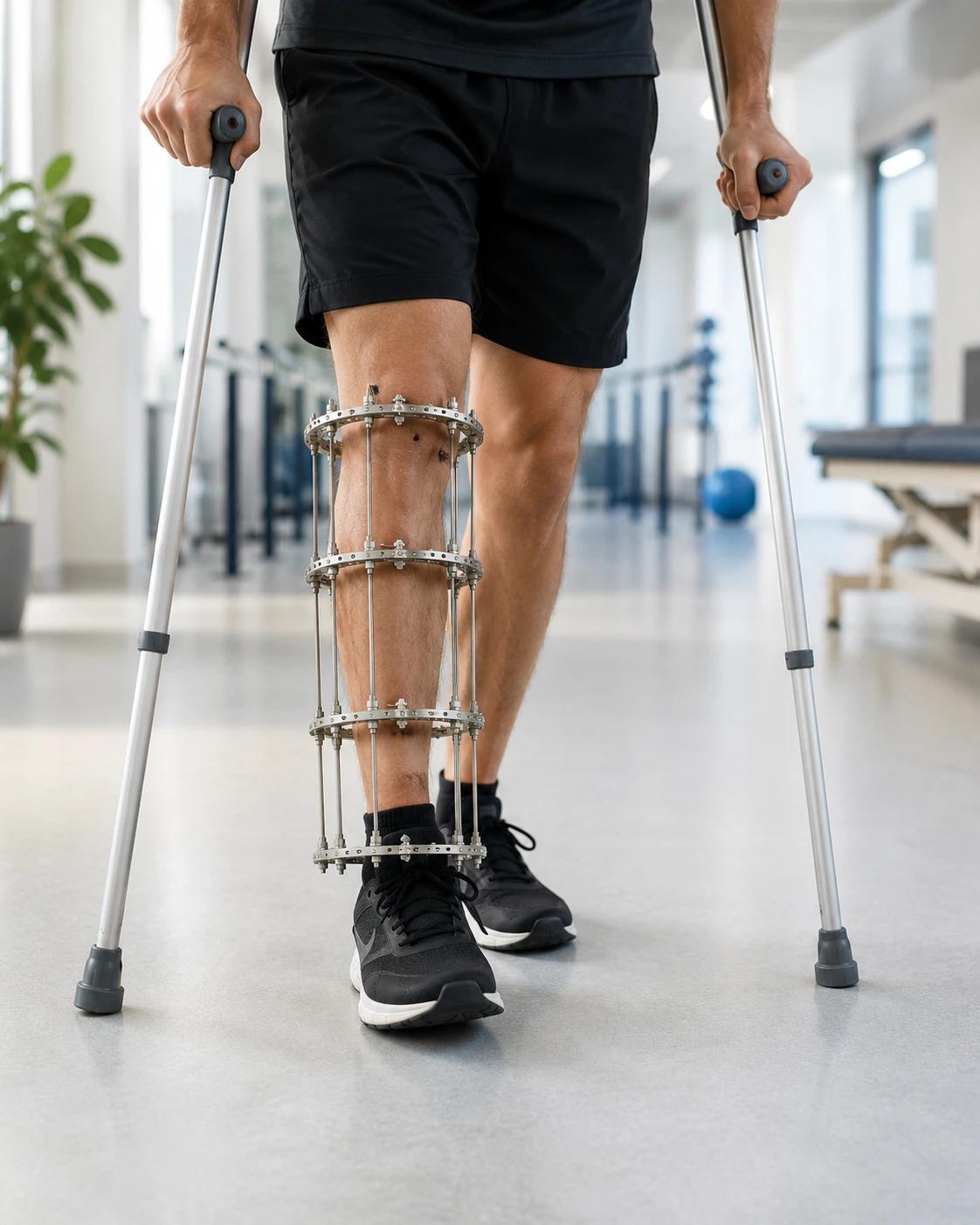
Confirm exactly how much weight you may put through the limb and which movements are allowed. Use prescribed aids, splints or braces. A frame or nail does not automatically permit full weight-bearing.
-
Preserve movement
Keep joints moving
Follow your prescribed joint-movement and muscle exercises, which your physiotherapist can teach and progress. During lengthening, muscles and nerves are stretched too; report increasing tightness, loss of movement, tingling or numbness promptly.
-
Care for the limb
Follow the care plan
Check wounds and, if present, pin sites for changes. Use the cleaning and dressing method taught by your team. Take prescribed medicines and follow any additional soft-tissue protection instructions.
-
Build function
Progress with reviews
Attend clinic and imaging appointments. Your team checks bone healing before changing loading or activity. Your physiotherapist can help you build walking, strength and daily tasks within the agreed limits, including after frame removal.
Frame or lengthening nail
Make adjustments only if trained and given a written schedule. Do not alter the rate yourself. Contact the team if an adjustment is missed or the device behaves unexpectedly.
Plan for a longer journey
Treatment often takes months. Pace activity and ask for help with equipment, work or school, sleep and wellbeing. Keep your reconstruction team’s contact details available.
When to get medical help
Call 999 / go to A&E: chest pain or sudden breathlessness; a cold, pale limb; or sudden severe pain with tight swelling or new weakness. Severe limb redness and swelling with feeling very unwell needs emergency assessment.
Contact your team the same day: spreading redness, pus, fever, increasing pin-site pain, new tingling or numbness, or reduced ability to use the limb. If unavailable, seek urgent GP / NHS 111 advice.
Device concerns: report loose or broken pins, wires or frame parts promptly. Avoid further loading until advised if the device feels unstable. Do not attempt repairs or change settings yourself.