What is power?
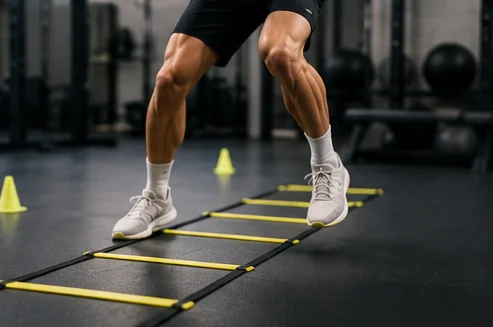
Power means producing force quickly, useful for accelerating, jumping and sport. Build it with strength and fast, skilful efforts. Aim for quality rather than exhaustion.

Your power training plan
-
Build readiness
Control before speed
Establish comfortable strength and movement first; a physiotherapist can check these, especially after an injury. Learn any jump, throw or fast lift with a qualified coach. Choose exercises matched to your ability, equipment and sport.
-
Train while fresh
Warm up & prepare
Use easy movement, dynamic mobility and progressively faster practice repetitions. Put technical power work before fatiguing conditioning, when you can move and land well.
-
Use short sets
Move with intent
Perform a few crisp repetitions, such as a light medicine-ball throw or low jump. Rest between sets. End the set when speed, landing control or technique noticeably drops.
-
Progress carefully
Build one demand
Increase difficulty gradually through movement quality, speed, load or complexity. Keep regular strength training. High boxes, heavy jumps and complex lifts are not necessary starting points.
A coached starting example
After a warm-up, try 2 sets of 3 low jumps or 2 sets of 5 light medicine-ball throws. Rest fully between sets. Use a lower-impact option if jumping is unsuitable. Your physiotherapist can check your strength base and landing before you start, and guide a safe return to power work after injury.
Plan recovery
Begin with a small amount of power work within your week. Allow 2-3 days between demanding jump sessions, adjusting for matches, running and other strength work. A physiotherapist can help you plan this around any tendon or muscle problems.
Train smart: when to get advice
Keep the space safe: use a stable, non-slip surface and clear landing or throwing area. Get supervision for unfamiliar explosive lifts; never throw towards someone who is not ready.
Stop if quality falls: pain, unstable landings or slowing repetitions mean reduce the demand or finish. Do not use fatigue as the target for a speed or power session.
After an injury: follow return-to-sport criteria before explosive work. A sudden snap, severe pain or inability to bear weight needs urgent assessment. Chest pain or collapse: call 999.