About scar tissue
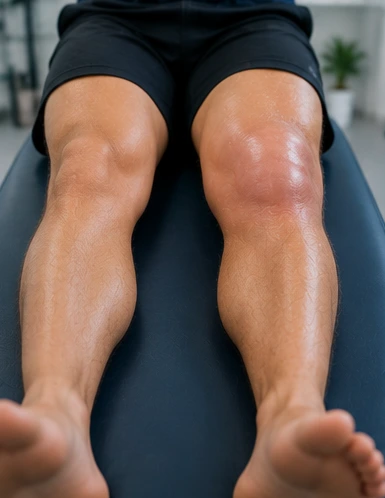
Scars are part of normal healing after injury or surgery. They may feel firm, itchy, sensitive or tight and can change over 2 years or more. This guide is for healed skin, alongside your clinical plan.
Your practical self-care plan
-
Wait for healing
Check before massage
Start only when the wound is fully closed, dry and healed, with scabs naturally gone, and your team says it is safe. Healing time varies; do not rely on a fixed week.
-
Care for the skin
Keep it comfortable
Wash and dry gently. Use a small amount of a suitable non-perfumed moisturiser on healed skin. Stop if it causes irritation and ask for an alternative.
-
If advised
Massage gently
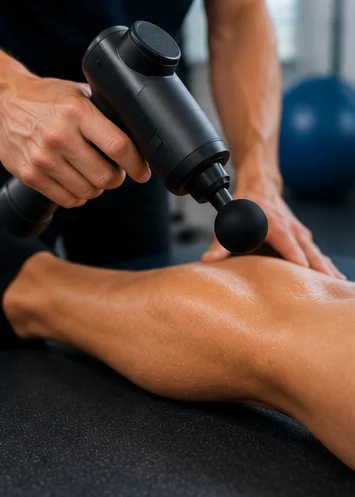
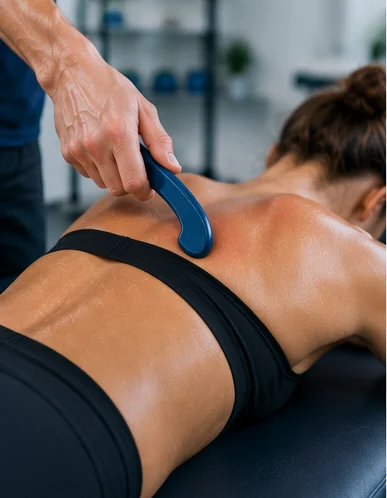
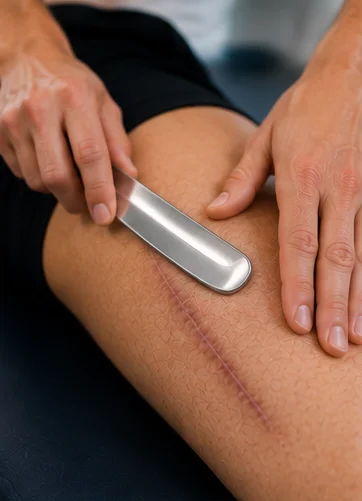
Use light, small circular movements as demonstrated by your physiotherapist. Build pressure only if advised and comfortable. Avoid deep pressure over numb skin or a healing repair.
-
Restore confidence
Move & desensitise
Follow the movement exercises your physiotherapist prescribes, especially if the scar crosses a joint. If touch is uncomfortable, your physiotherapist may introduce gentle textures and touch gradually rather than forceful rubbing.
Other options
Silicone gel or sheets may help some raised scars, once the skin is fully healed. Ask your physiotherapist or surgical team about suitability. Massage does not remove a scar or guarantee release of deeper adhesions.
Protect from the sun
Cover the scar and use SPF 50 sunscreen on healed skin. Follow your team’s advice, especially during the first year. Scars can be more vulnerable to sun damage.
When to get medical help
Urgent GP / NHS 111: increasing warmth, swelling or pain, pus, spreading redness or fever. These may indicate infection; stop massage and do not apply silicone over the area.
Contact your surgical team: a wound that opens, bleeds or begins leaking, or concerns about a skin graft, flap or tendon repair. Follow the procedure-specific restrictions before starting scar treatment.
Arrange a review: a scar that restricts movement, keeps growing beyond the original wound, remains very painful or affects your wellbeing. Specialist scar care may help; do not keep increasing pressure.